
OVERVIEW
Spark Mindset is a Denver-based nonprofit whose mission is to spark opportunity by increasing access to transformative technology careers. One of the ways they aim to accomplish this goal is through the use of virtual reality as an educational tool. They are currently designing a VR video game to teach students about cybersecurity.
Brief: I was tasked with designing a level for the Spark Mindset educational VR Game
My role: user research | game design | VR concept illustrations
Scope: team of four | duration of four weeks
Tools: Photoshop | Procreate | Sketch | Realtimeboard

GAME DESIGN
Designing for VR was unlike anything I had done in UX before. I am comfortable designing UI elements for apps and websites, but VR is a completely different animal. Through researching best practices and studying current VR games, I was able to distill some key principles for designing in VR and use them as a guide for creating the level for Spark Mindset:
Design something that can only be done in VR
Avoid 2D UI whenever possible
Provide clear feedback for interactions
Design for the user, and design for context
Experiment, test, and iterate
Using an iPad Pro and the illustration program Procreate, I sketched out an overview concept for the level design:
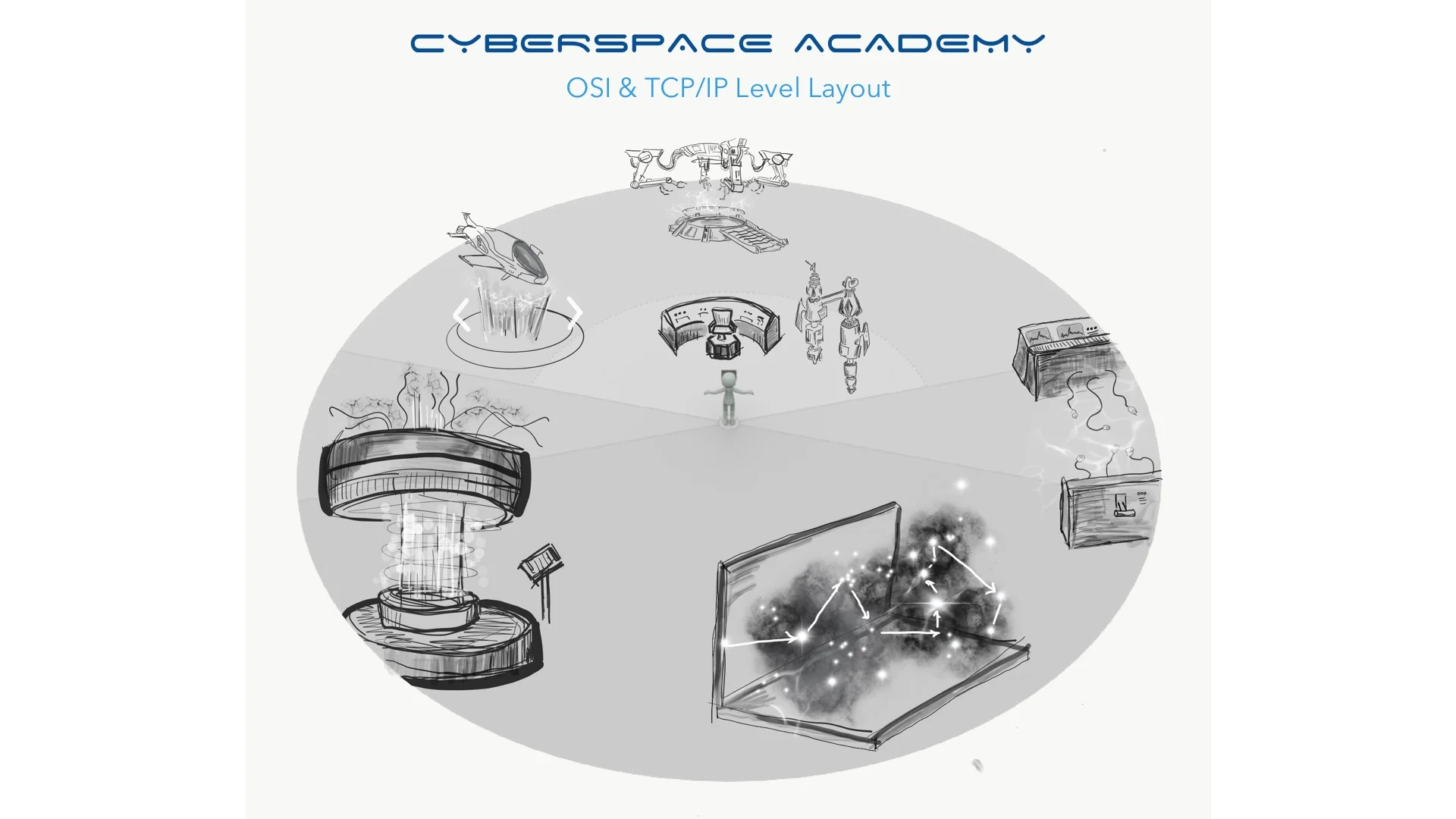
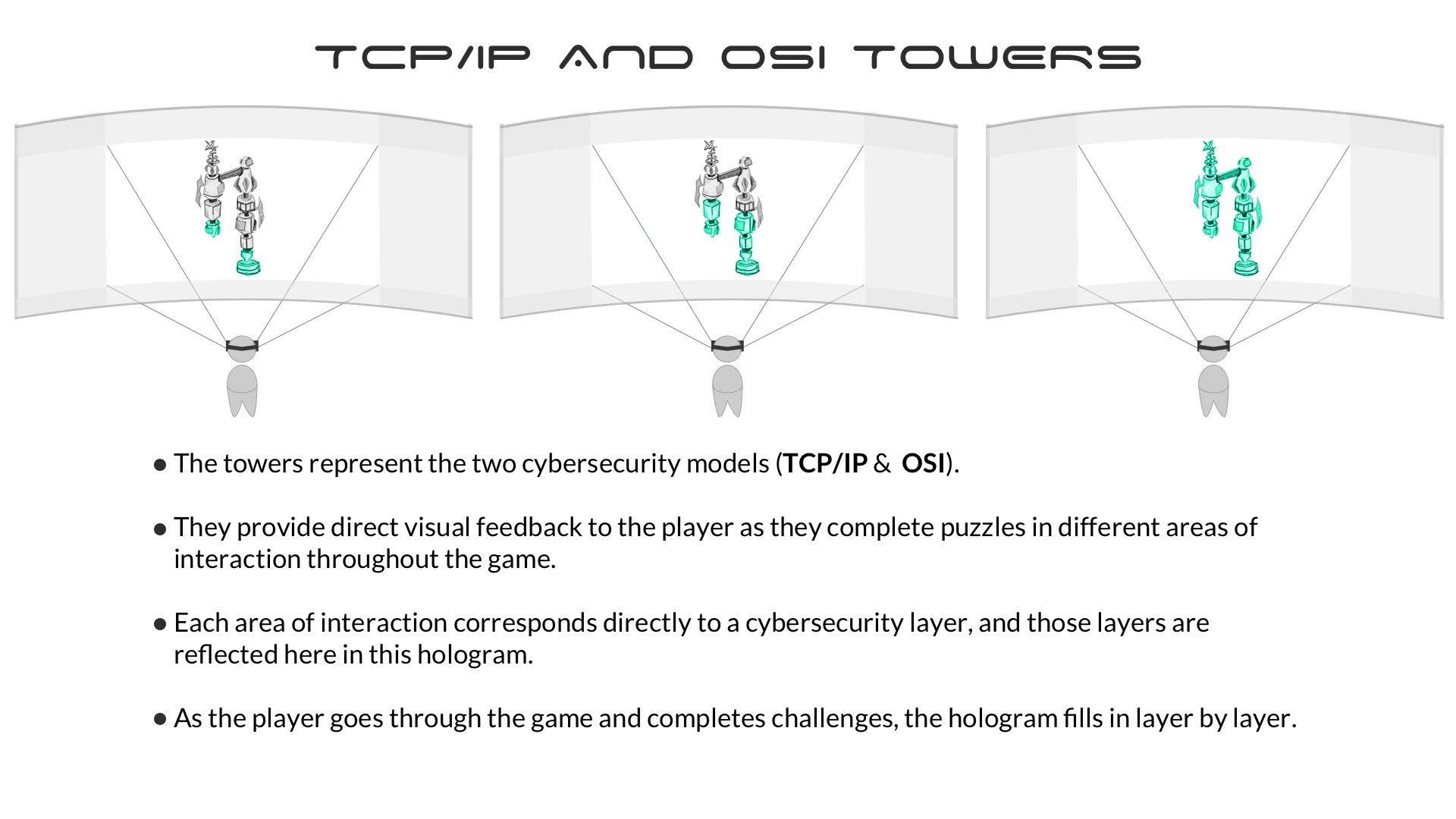
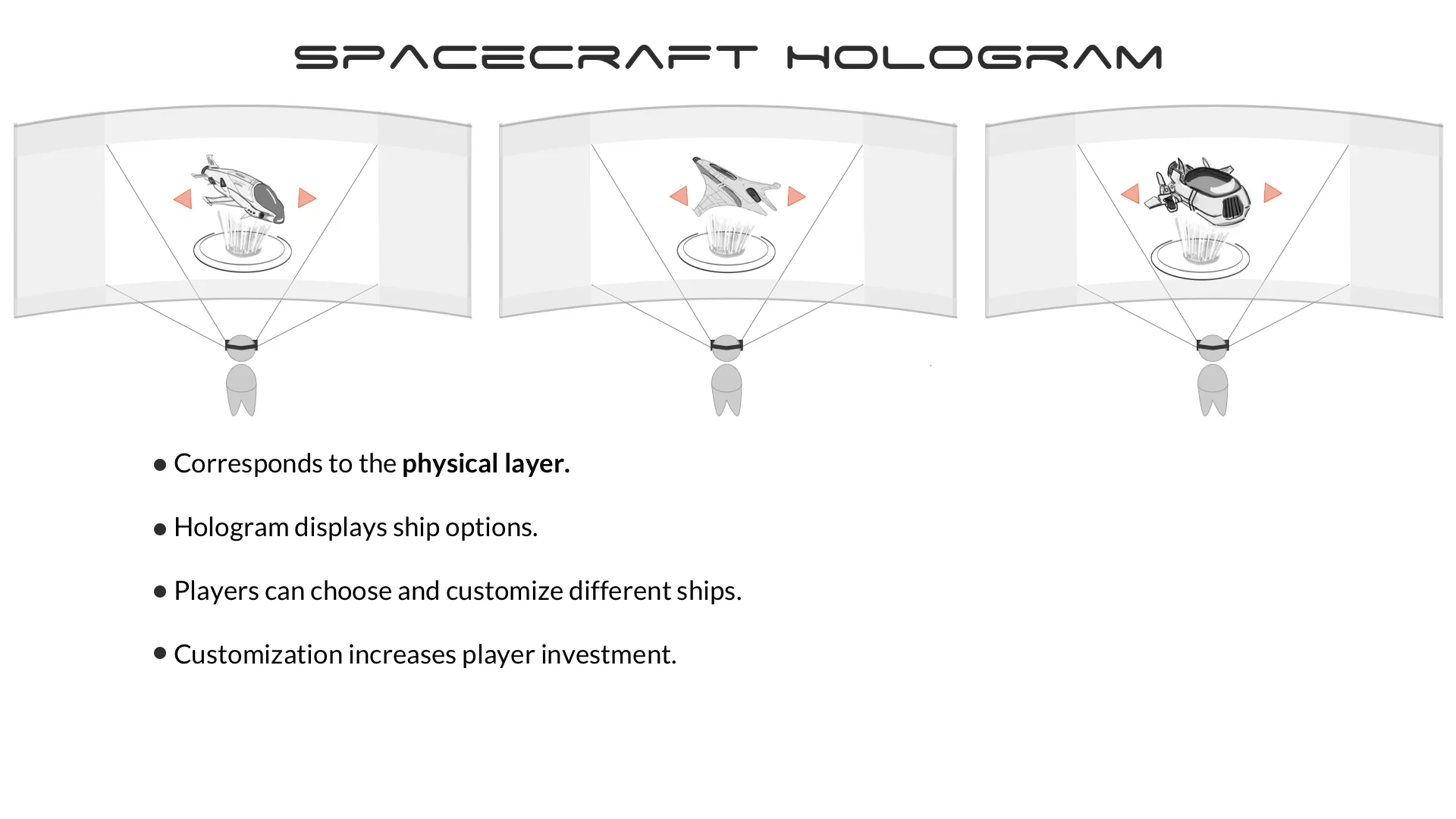
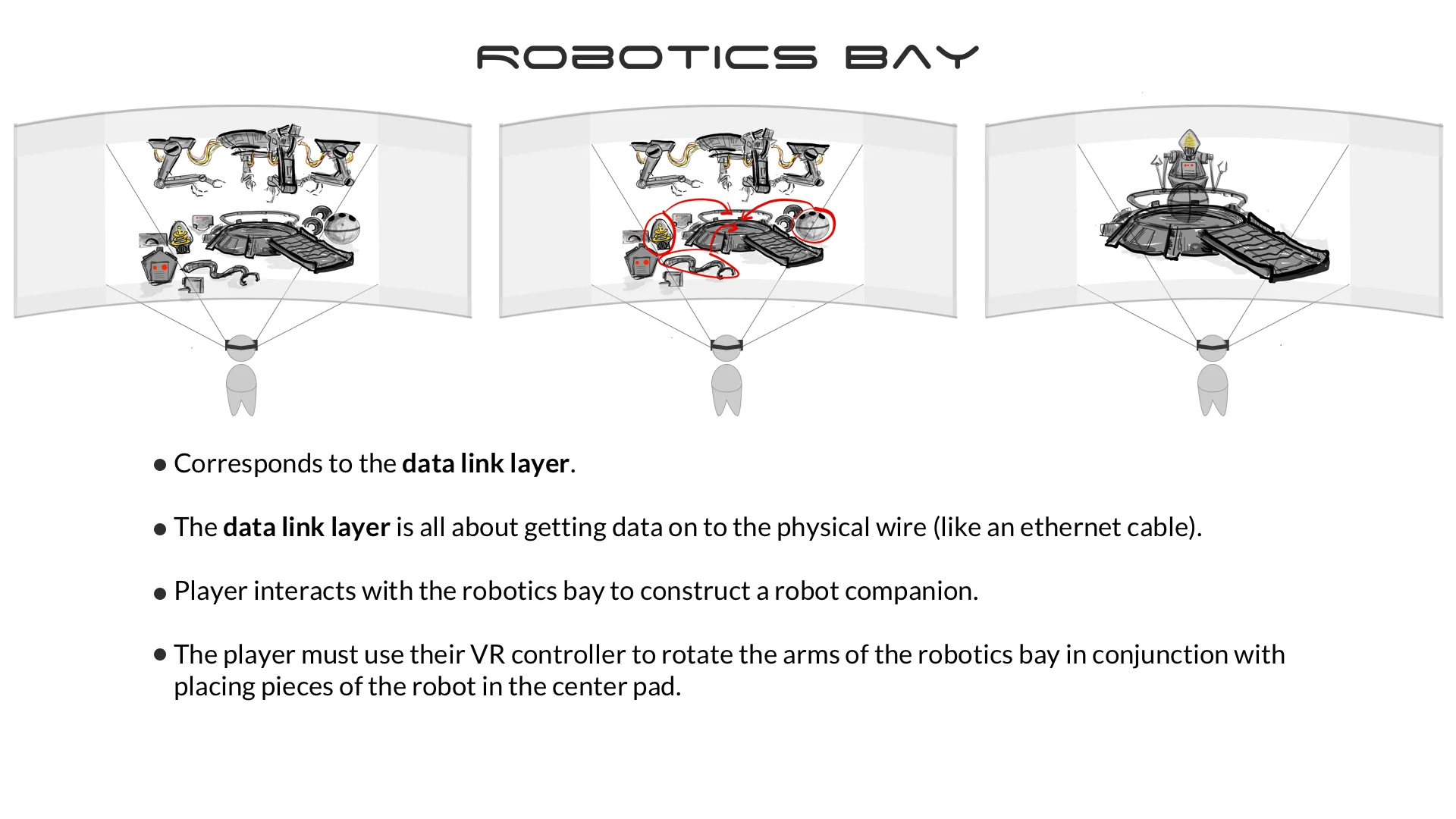
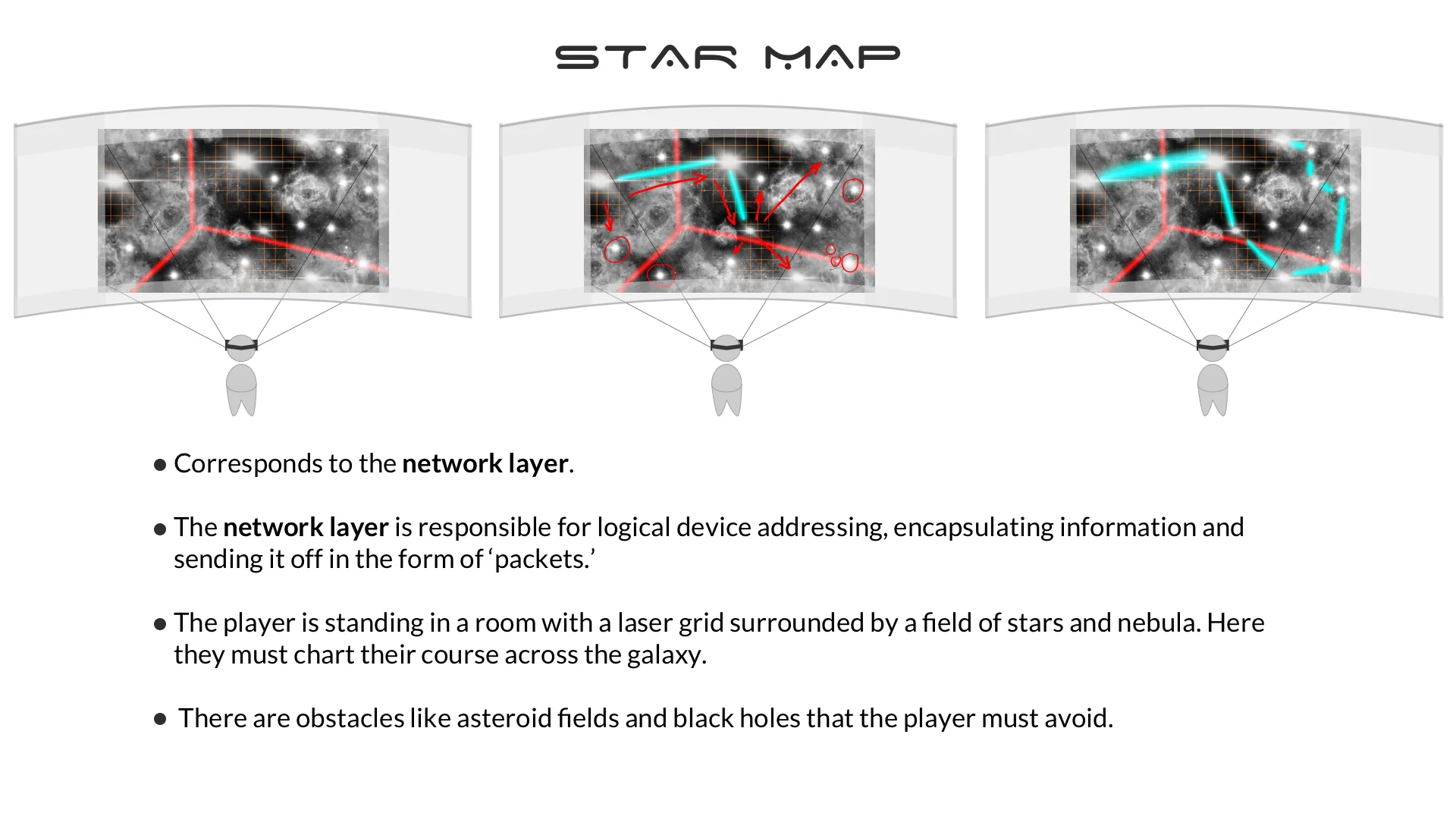
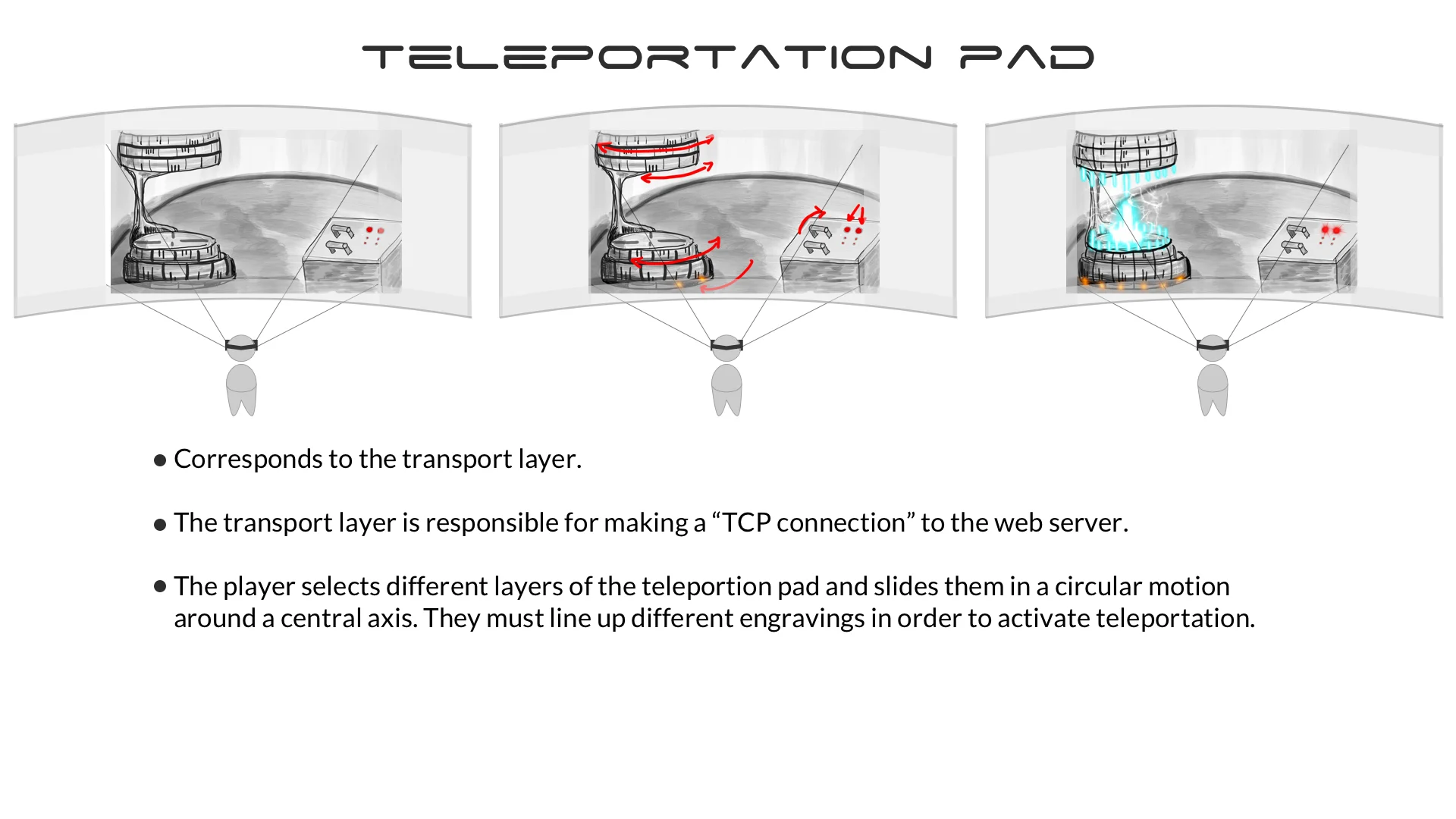
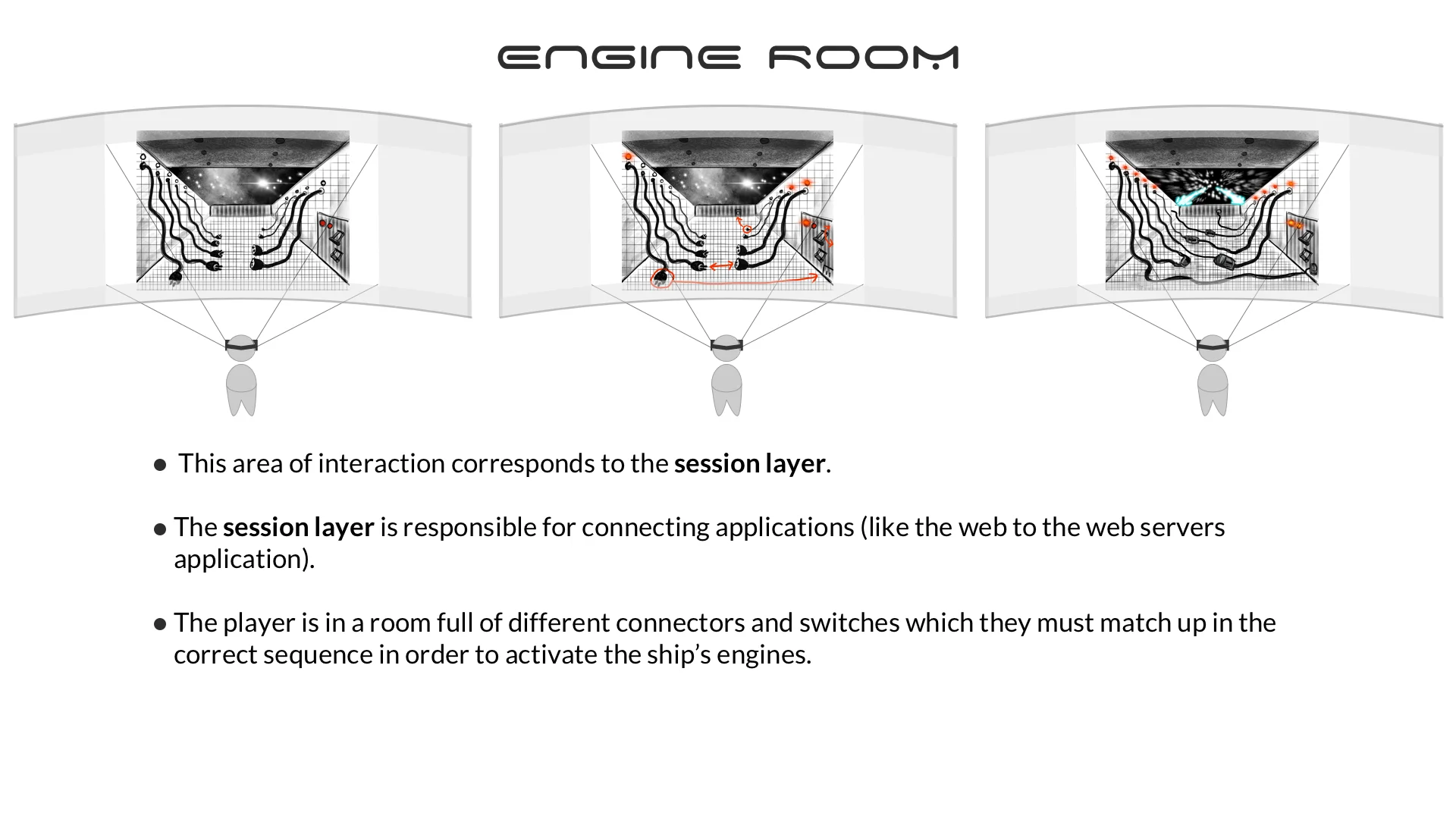
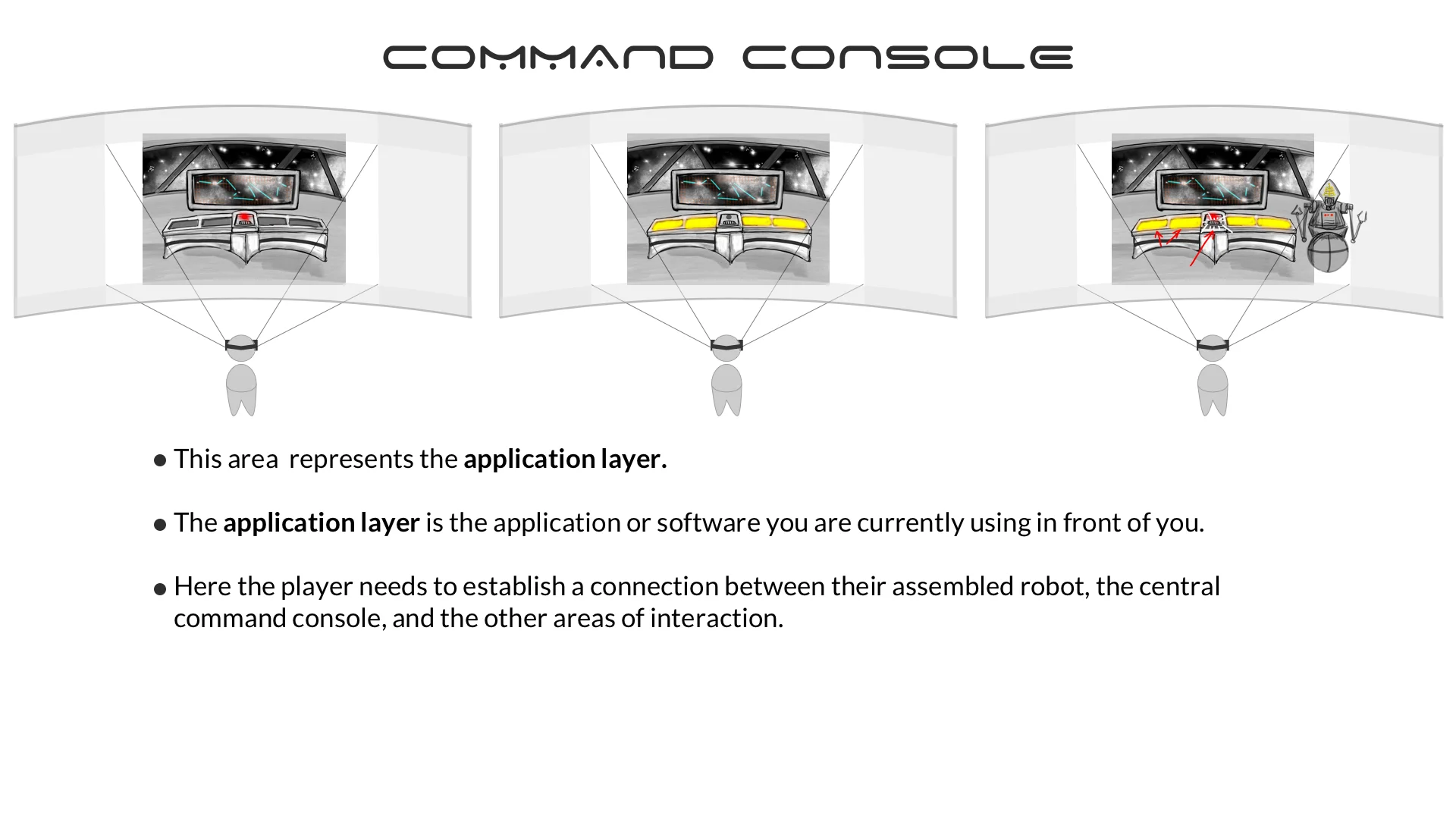
I created VR storyboards to help imagine and explain the different areas of interaction a player encounters throughout the level and how they relate to cybersecurity concepts in the OSI & TCP/IP models:
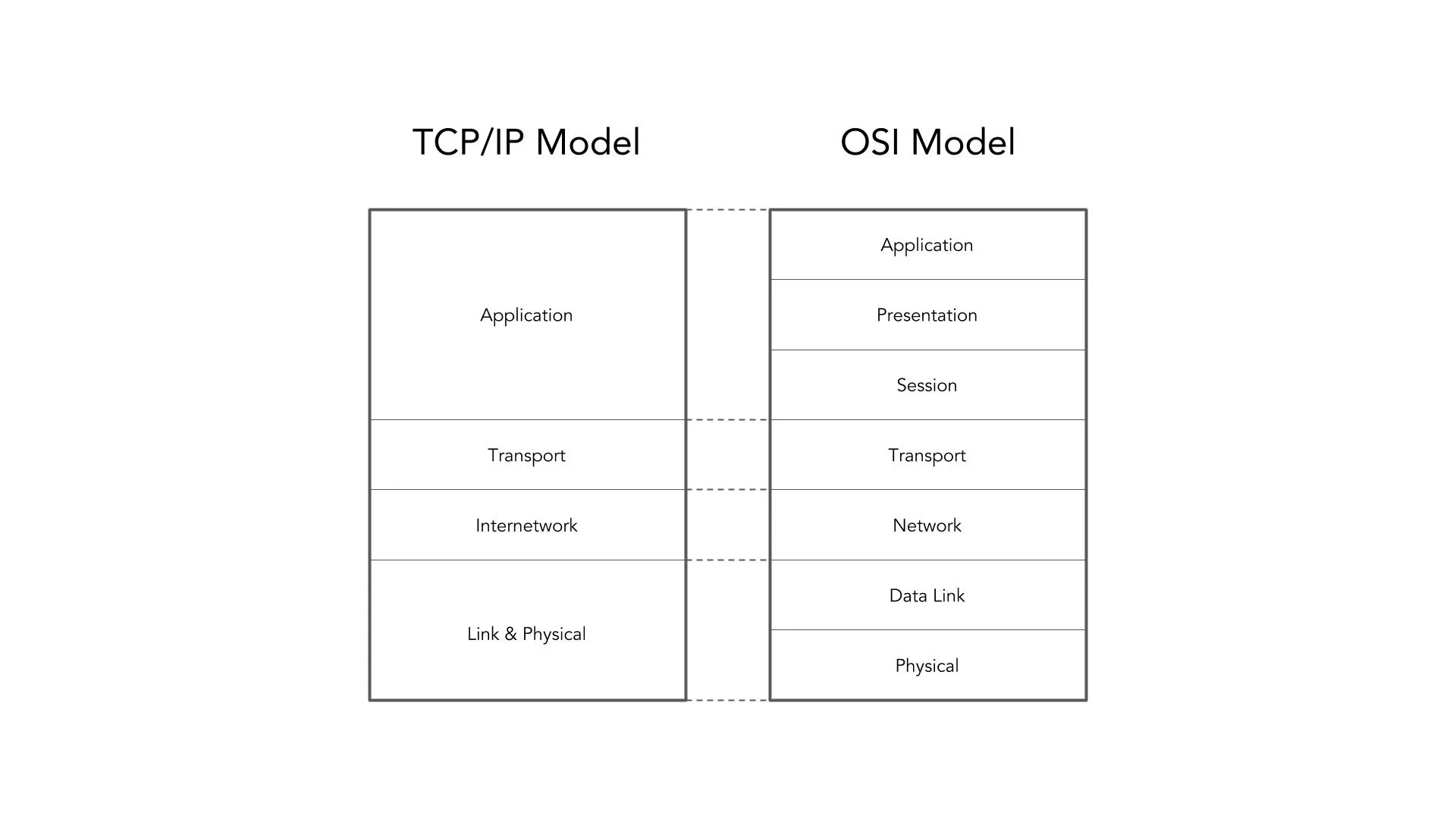
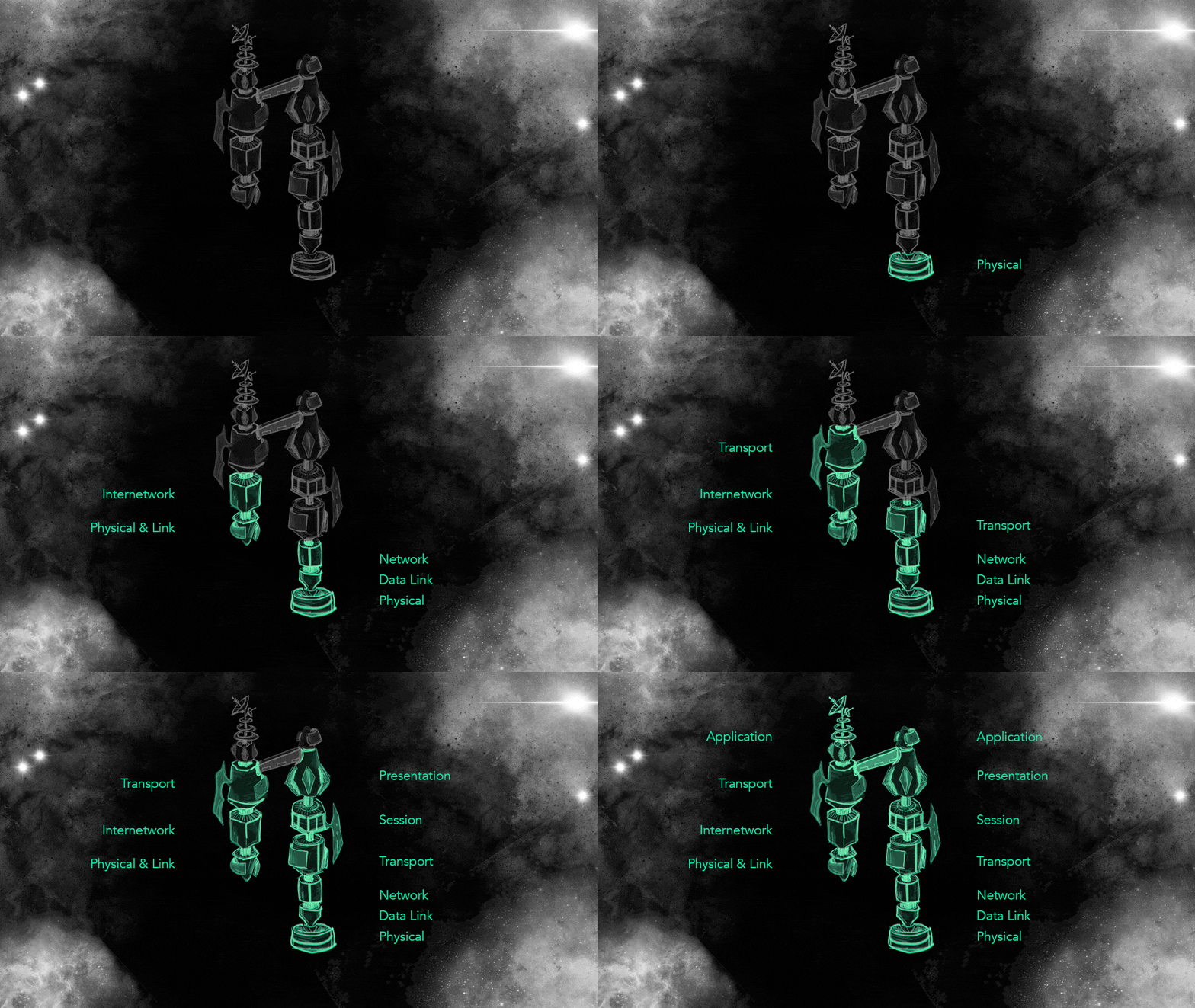
In cybersecurity there are two models to describe general guidelines for designing and implementing computer protocol: TCP/IP & OSI. The game level for this project is based around explaining the basics of these cybersecurity models.
BRINGING THE LEVEL TO LIFE
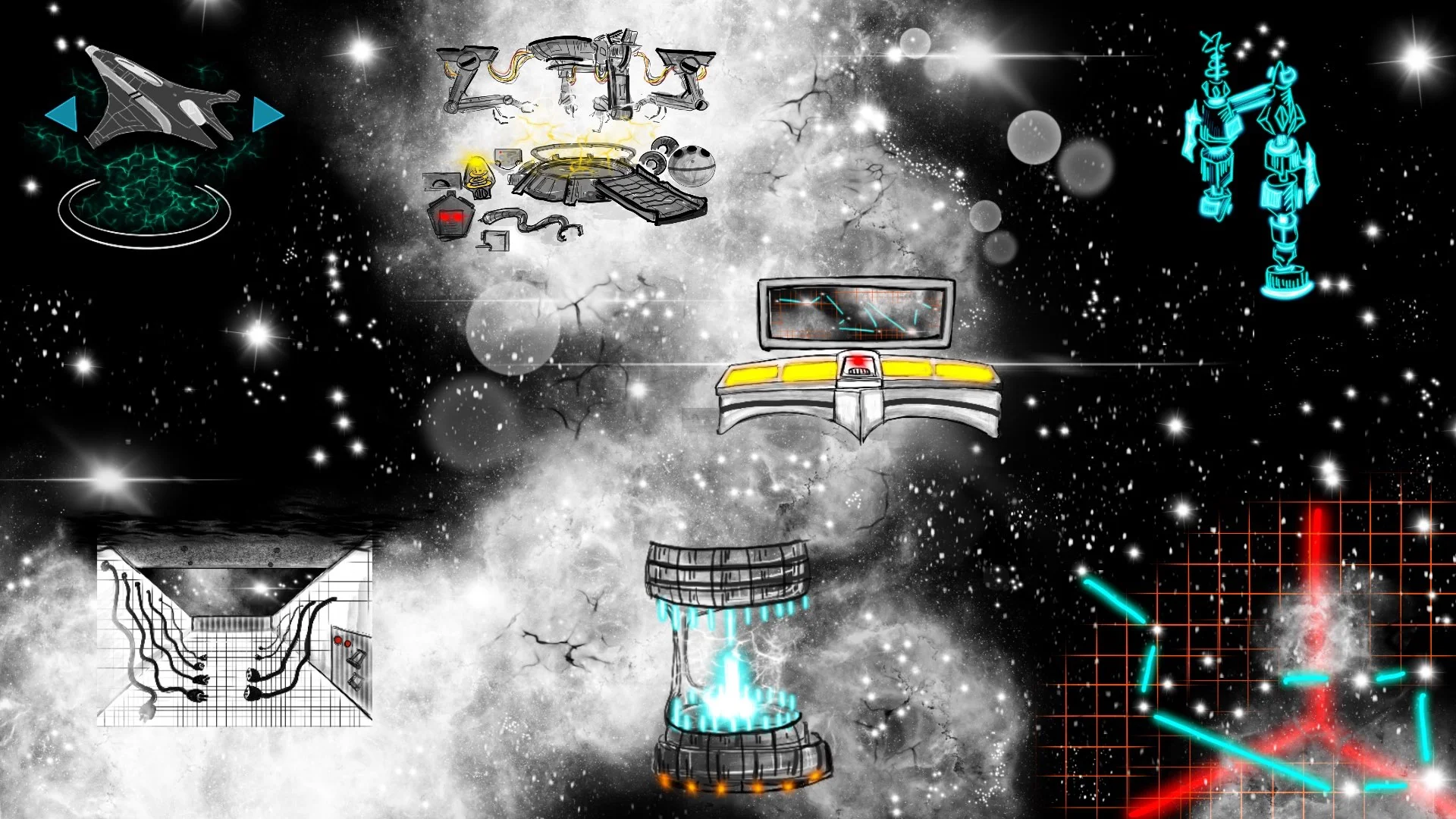
After outlining a basic concept flow with storyboards, I created higher fidelity illustrations and added some subtle animation to breathe a little more life into the concept.
You can scroll through the carousel below to see the seven different areas of interaction throughout the level:
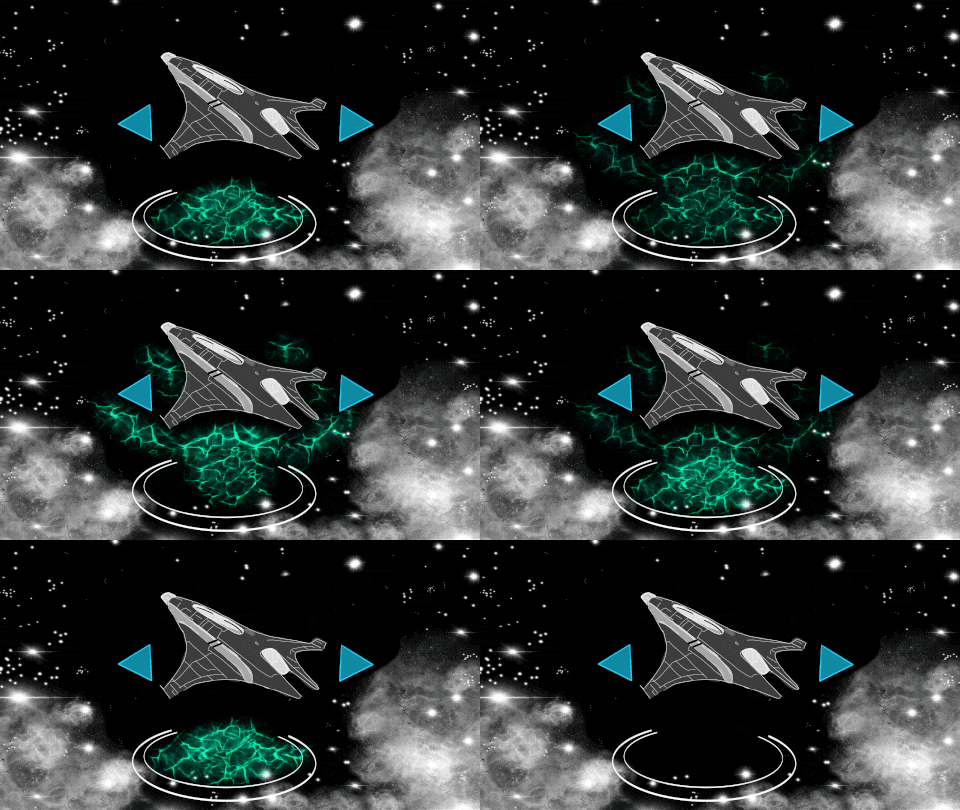
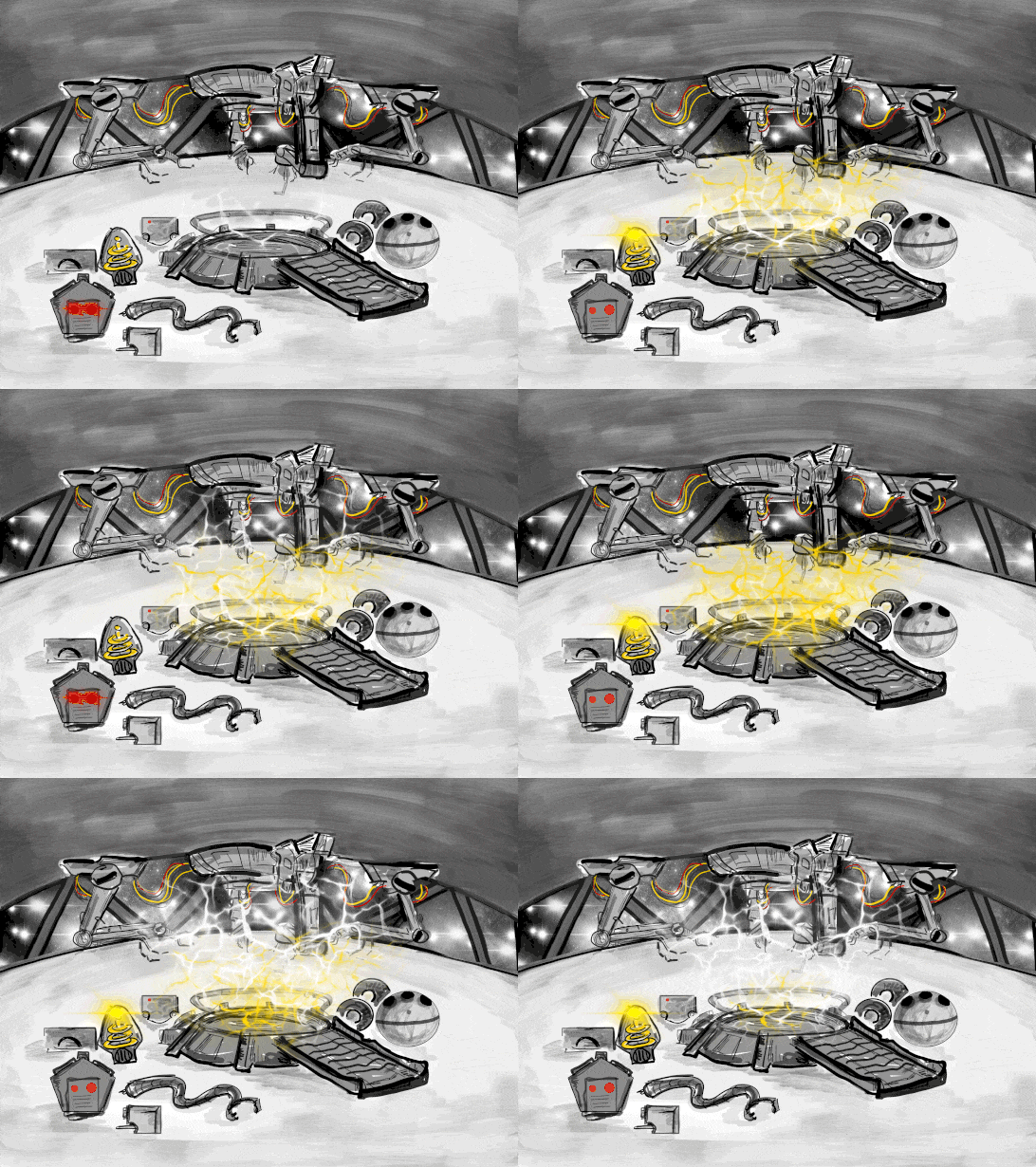
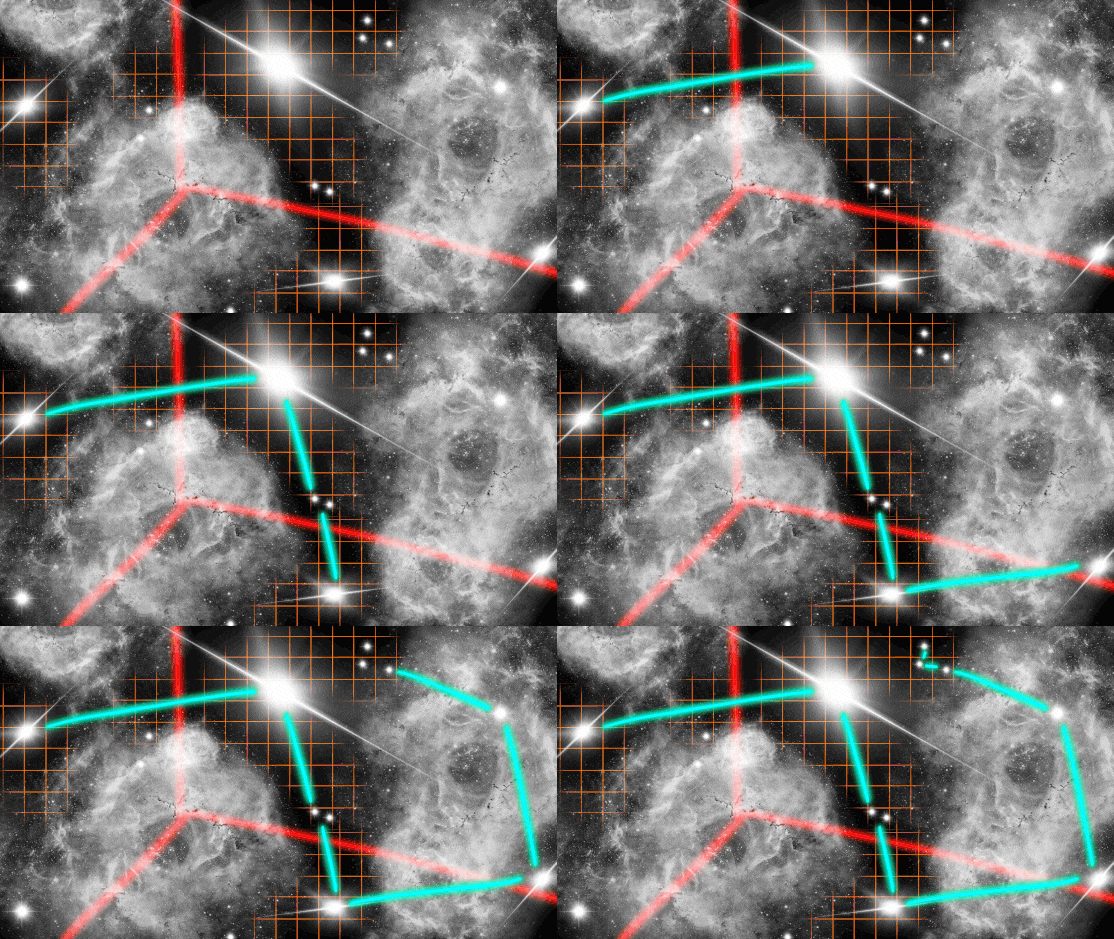
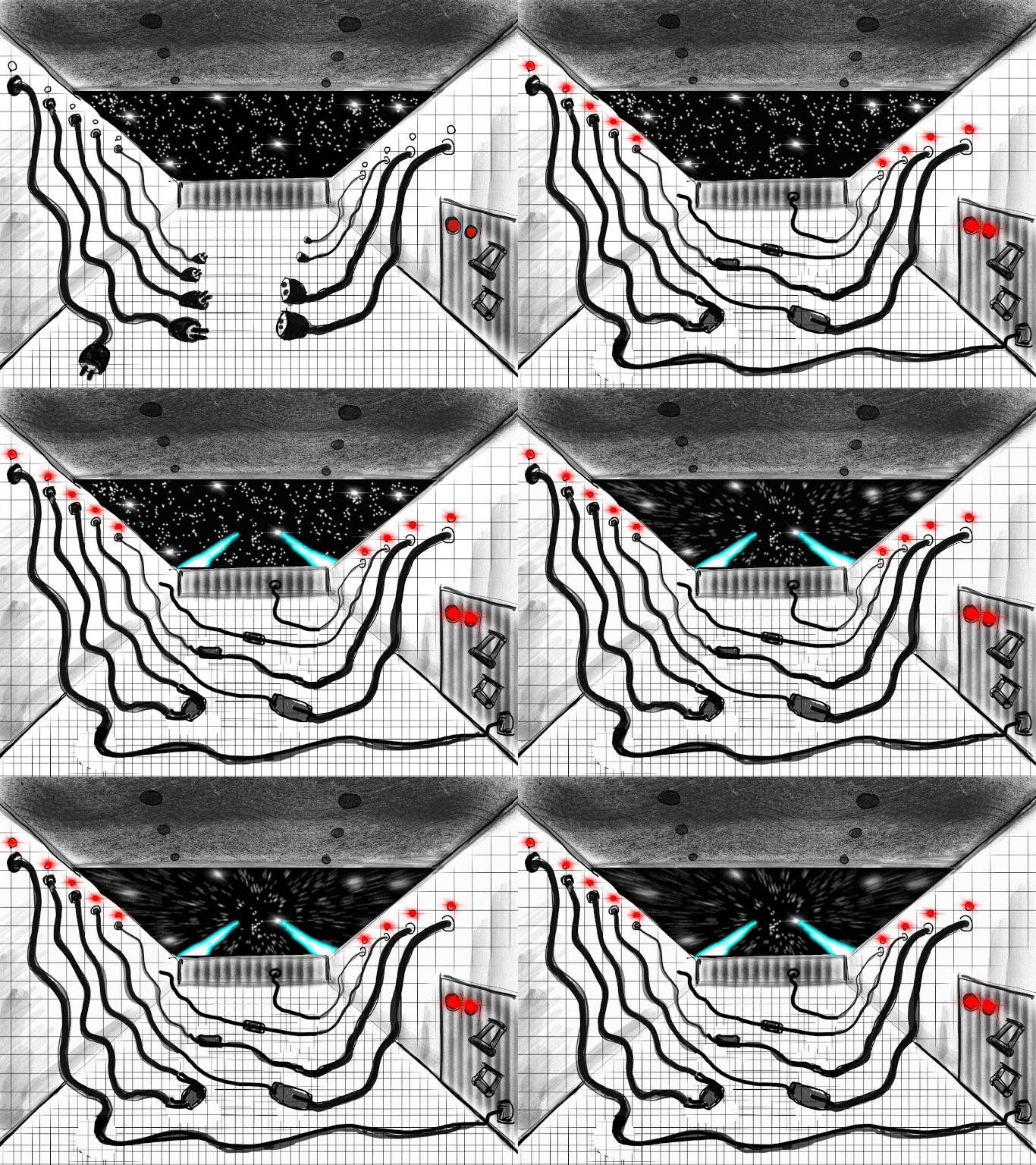

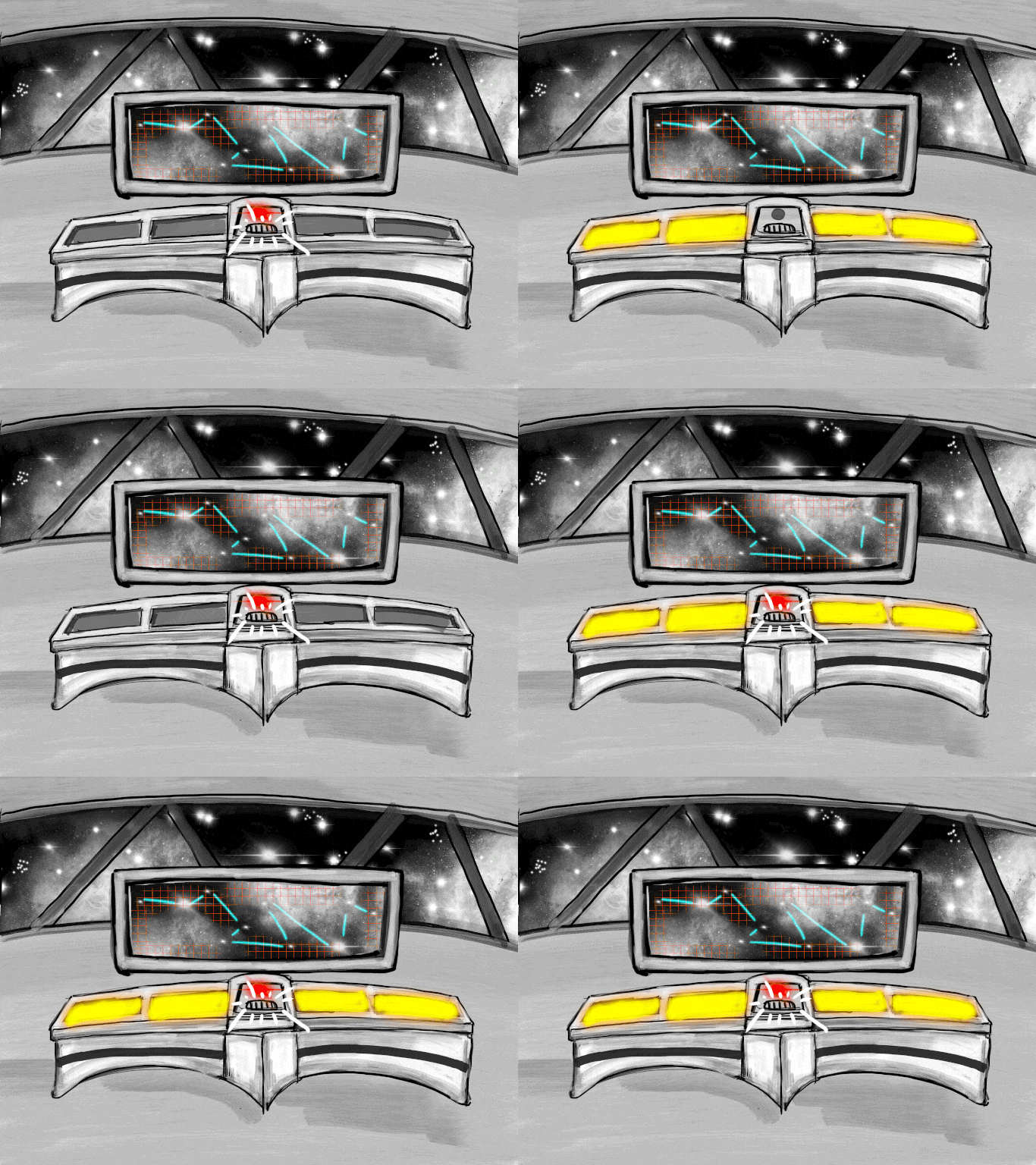
Finally, I wanted to place all of the areas of interaction in a 3D space before presenting the design to the client and developers. Have a look around in the 360 viewer below to get a feel for the level concept in a 3D space:
CLIENT’S RESPONSE
The client was thrilled with the final product and is currently working on developing this level based on my game concept and illustrations.
In addition to delivering the game design to the client, we were able to highlight some key opportunities for improvement while rolling out their pilot program in schools.
Spark Mindset is now restructuring their model to be more sensitive to the issue of cybersickness. Because of the research we presented, they plan to provide VR alternatives (like a desktop version of the game) as well as pre-screening surveys to identify students that may be prone to motion sickness.
SO HOW DID WE GET THERE?
Animating illustrations for VR was incredibly fun, but it took a lot of work and research to get there. Starting out, we were overwhelmed with many unfamiliar concepts including:
Cybersecurity and the OSI & TCP/IP models
Designing a virtual reality game
Designing an educational game
How to effectively use emerging technology in the classroom
In addition to leveraging online resources on cybersecurity and VR, we conducted interviews with teachers and students to better understand how technology and games might best be used in the context of education.
Teachers
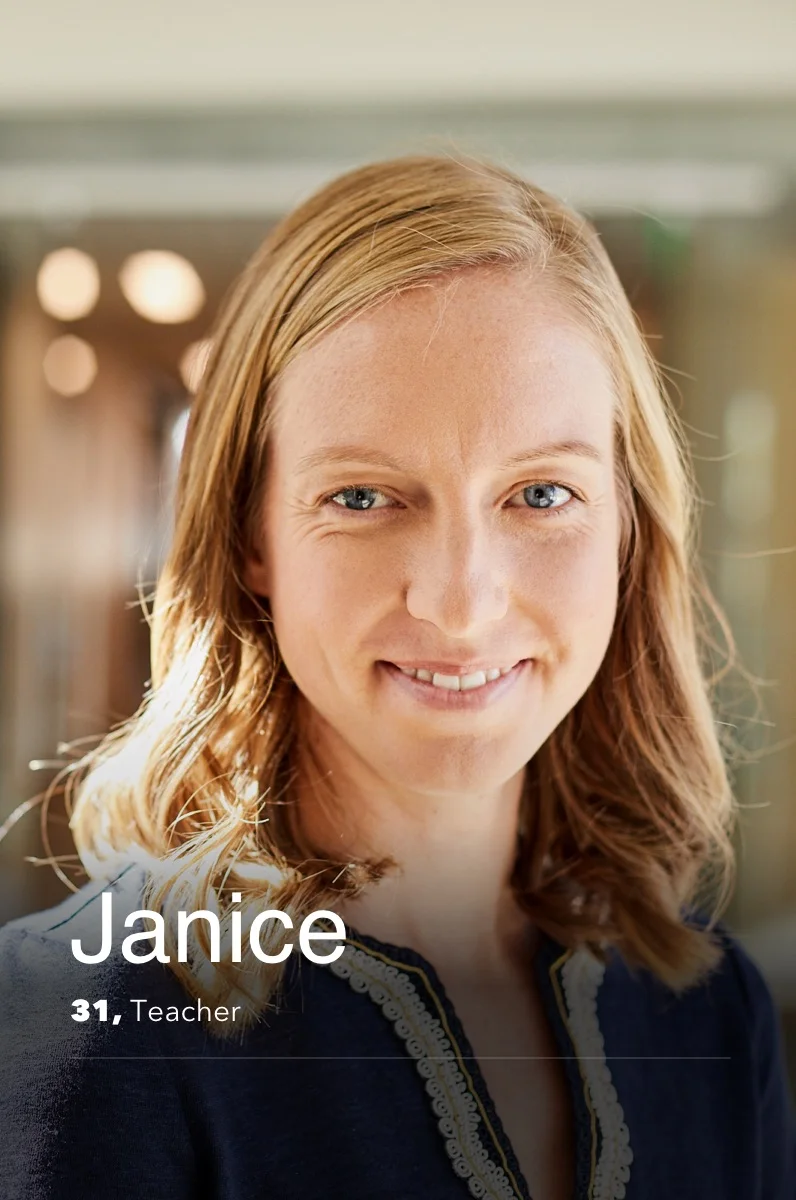
“It’s important to diversify teaching methods because students have different learning styles.”
Teachers feel it is much more challenging to teach subjects outside of their specialty
Teaching methods should be diverse and engaging
It is important to incorporate technology in the classroom as much as possible
Most have not had the opportunity to incorporate VR, but have plans to do so within the next year
Students

“I’m a visual learner, so I really like games and in-class activities.”
Students have heard of VR but have never used it before
Cyber Security is confusing and intimidating
Students get most value out of educational games when paired with in-class lessons explaining concepts and how they connect to the game
JOURNEY MAPS
Using our qualitative data from interviews and research, we created teacher and student journey maps in order to get a feel for what a day of using VR in the classroom might look like.
OPPORTUNITIES & INSIGHTS
By working through a VR class day and several potential problem areas, we were able to highlight opportunity areas that were incredibly valuable for Spark Mindset.
Cybersickness is something that came up again and again in research. If you are going to use VR, you have to have a contingency plan when students get sick (e.g. a desktop alternative for the game and/or pre-screening surveys).
The use of VR in education is such a new and novel concept that it will be incredibly important to iterate and improve the process to work out logistical kinks. An online portal, or community dashboard to compare notes and share improvements across different schools could help speed up the process.